
THE PROJECT

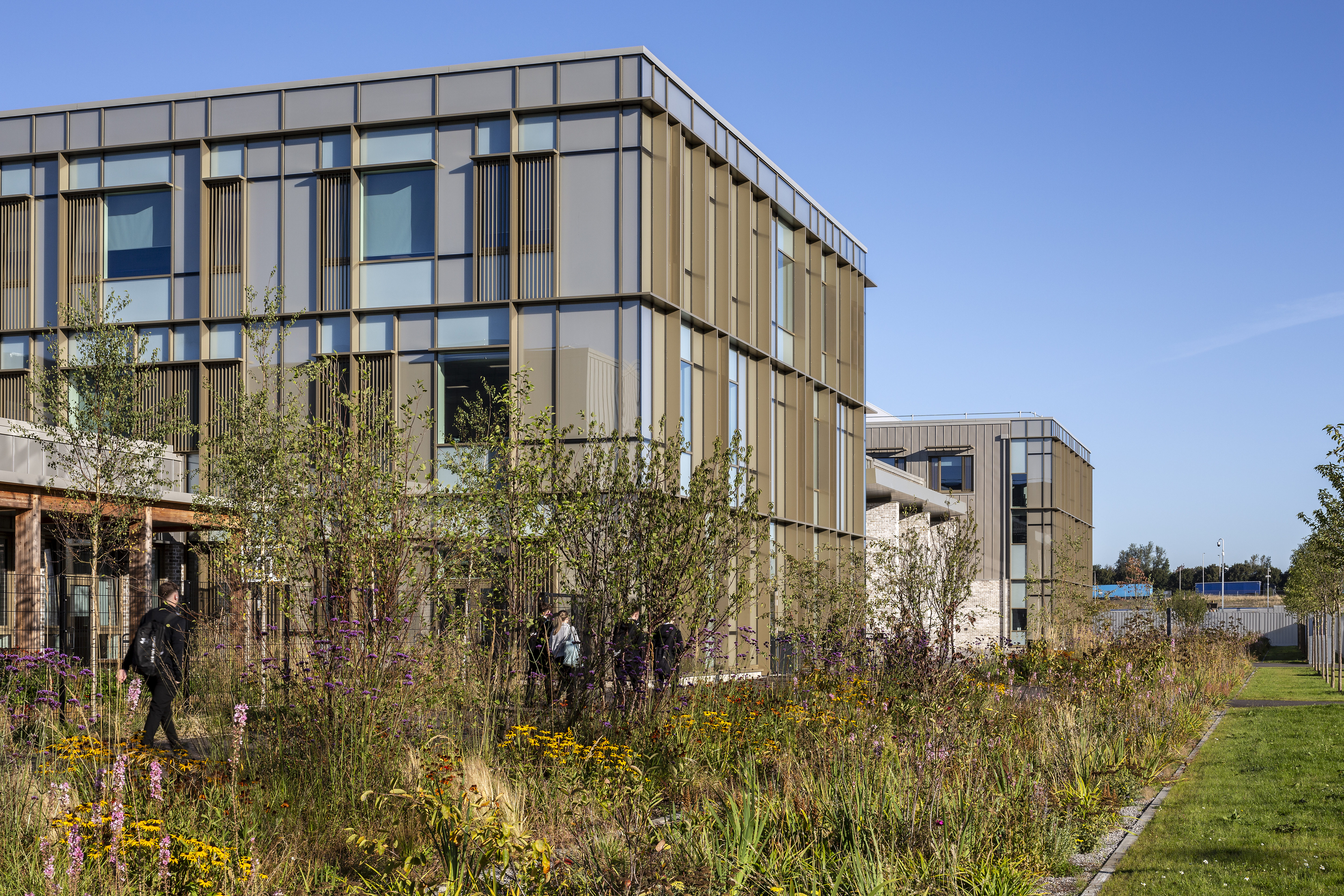
Dunfermline Learning Campus represents a landmark development in sustainable education infrastructure, bringing together Woodmill High School and St Columba’s RC High School within a single, highly innovative building. Delivered through a partnership between Fife Council and Fife College, the campus has been designed not only to enhance educational outcomes, but also to support the wider community and local economy. The project has generated over £34 million in social and economic benefit, including local employment, apprenticeships and investment in community facilities.

Spanning more than 20,000m² and comprising three interconnected buildings, the campus is currently recognised as the UK’s largest Passivhaus certified building and the largest Passivhaus educational facility in the world.

As a pathfinder project for the Scottish Government’s Net Zero Public Sector Buildings Standard, the development demonstrates how large-scale public buildings can meet ambitious environmental targets while delivering exceptional internal environments for occupants.

Central to the Passivhaus approach is a focus on delivering outstanding indoor air quality, thermal comfort and energy efficiency through a fabric-first design, supported by high-performance mechanical ventilation with heat recovery.
THE CHALLENGE

Delivering a Passivhaus-certified building at this scale presented a unique set of challenges, particularly in relation to ventilation.

Passivhaus buildings rely on airtight construction and minimal energy loss, meaning that ventilation systems must deliver highly efficient heat recovery while maintaining excellent indoor air quality. This is especially critical in educational environments, where high and variable occupancy levels can significantly impact air quality and comfort.

For Dunfermline Learning Campus, the challenge was to design a system capable of serving a diverse range of spaces – from classrooms and corridors to specialist teaching areas and sports facilities – while maintaining strict Passivhaus performance criteria.

The system also needed to support flexible use of the building, allowing different zones to operate independently depending on occupancy patterns, including community use outside of school hours.

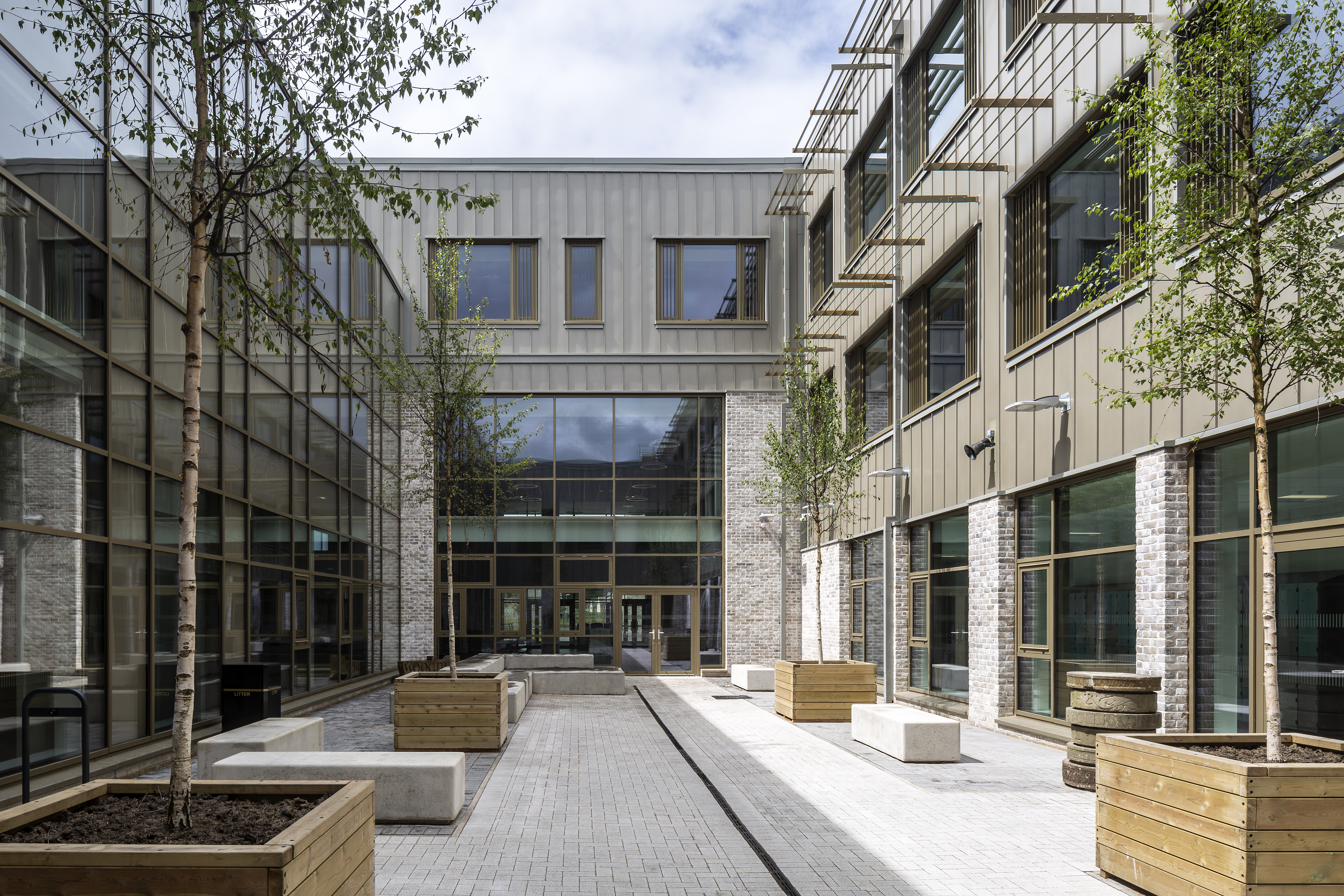
Inner courtyard.jpg

THE SOLUTION

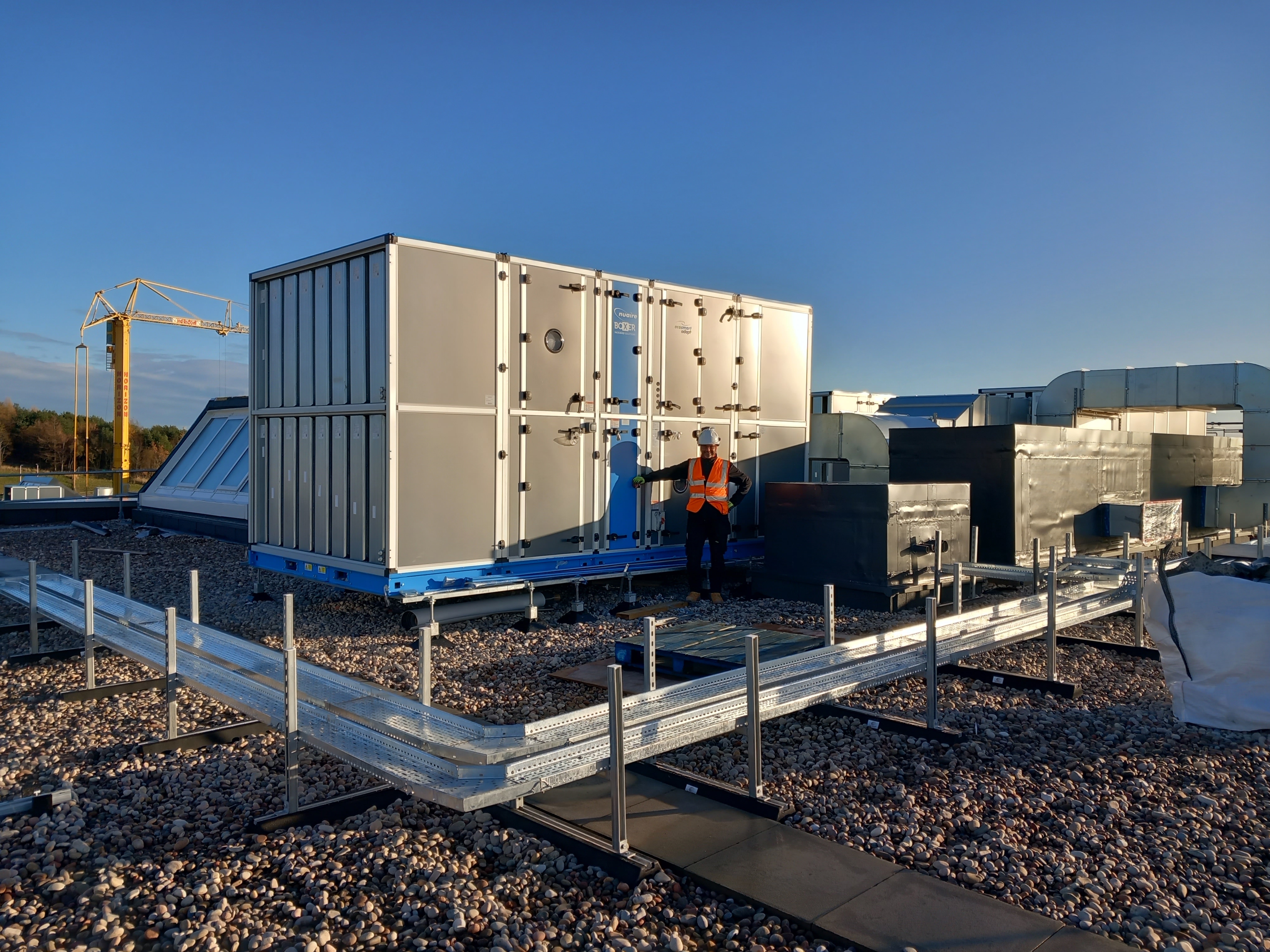
Nuaire supplied a comprehensive commercial ventilation solution tailored to meet the demands of this pioneering Passivhaus project.

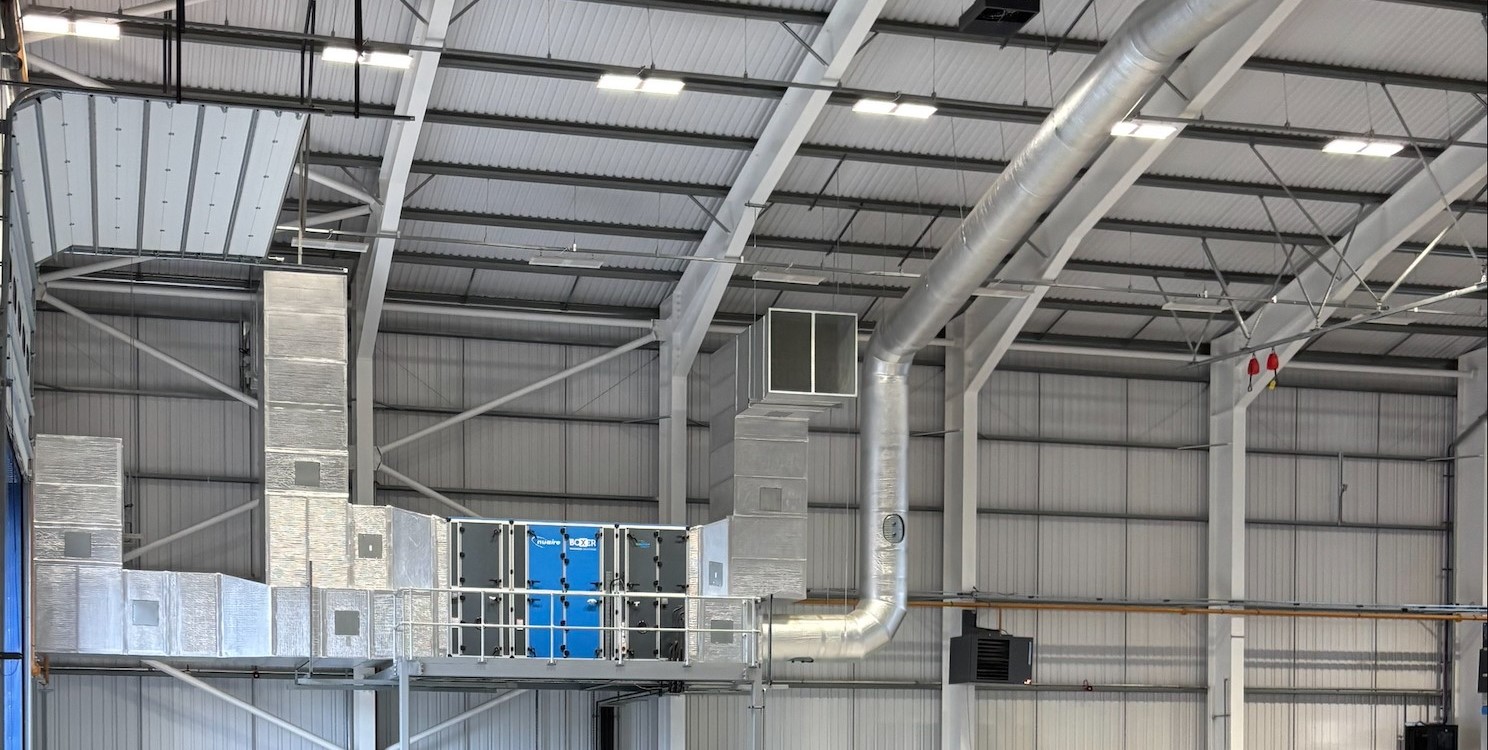
At the heart of the system are 29 Nuaire BPS Passivhaus Air Handling Units (AHU), installed in a range of sizes (12, 17, 22, 32 and 42), alongside three XBC Passivhaus packaged heat recovery units size 55.  All units are Passivhaus certified components, independently tested to meet stringent requirements for efficiency, airtightness, thermal comfort and indoor air quality.

The BPS Passivhaus AHUs provide a high-performance, energy-efficient solution, incorporating features such as a dual compressor system, high-efficiency thermal wheel and L1 classification low air leakage construction.  M5 extract air filters within the AHUs enable pollutants as small as 1 micron to be captured, whilst G4 and G7 supply air filters are designed to stop larger pollutant particles from entering, helping to maintain clean, healthy air.

The XBC Passivhaus units utilise high-efficiency plate heat exchangers with heat recovery efficiencies of up to 95%, ensuring minimal energy loss.  High classification F7 and G4 extract filters ensure the units meet the high Passivhaus air quality standards, whilst airtight seals prevent heat or air loss up to L2 leakage classification.  They have been designed with the lowest possible noise breakout for user acceptance.

Both BPS Passivhaus and XBC Passivhaus are fitted with high classification class 3 dampers to ensure the units remain airtight, mitigating weak points in a Passivhaus build.

The ventilation strategy adopted a cascade approach, enabling multiple spaces to be served efficiently by shared systems. Fresh air is transferred between areas where occupancy patterns allow, reducing overall air volume requirements and improving system efficiency.

Dedicated systems were used for specialist areas, while standalone units in the sports block allow independent control. This zoned approach ensures that ventilation can be adjusted in line with occupancy, supporting both energy efficiency and user comfort.

All systems are integrated with TREND controls, enabling precise management of performance and helping to maintain optimal conditions throughout the building.


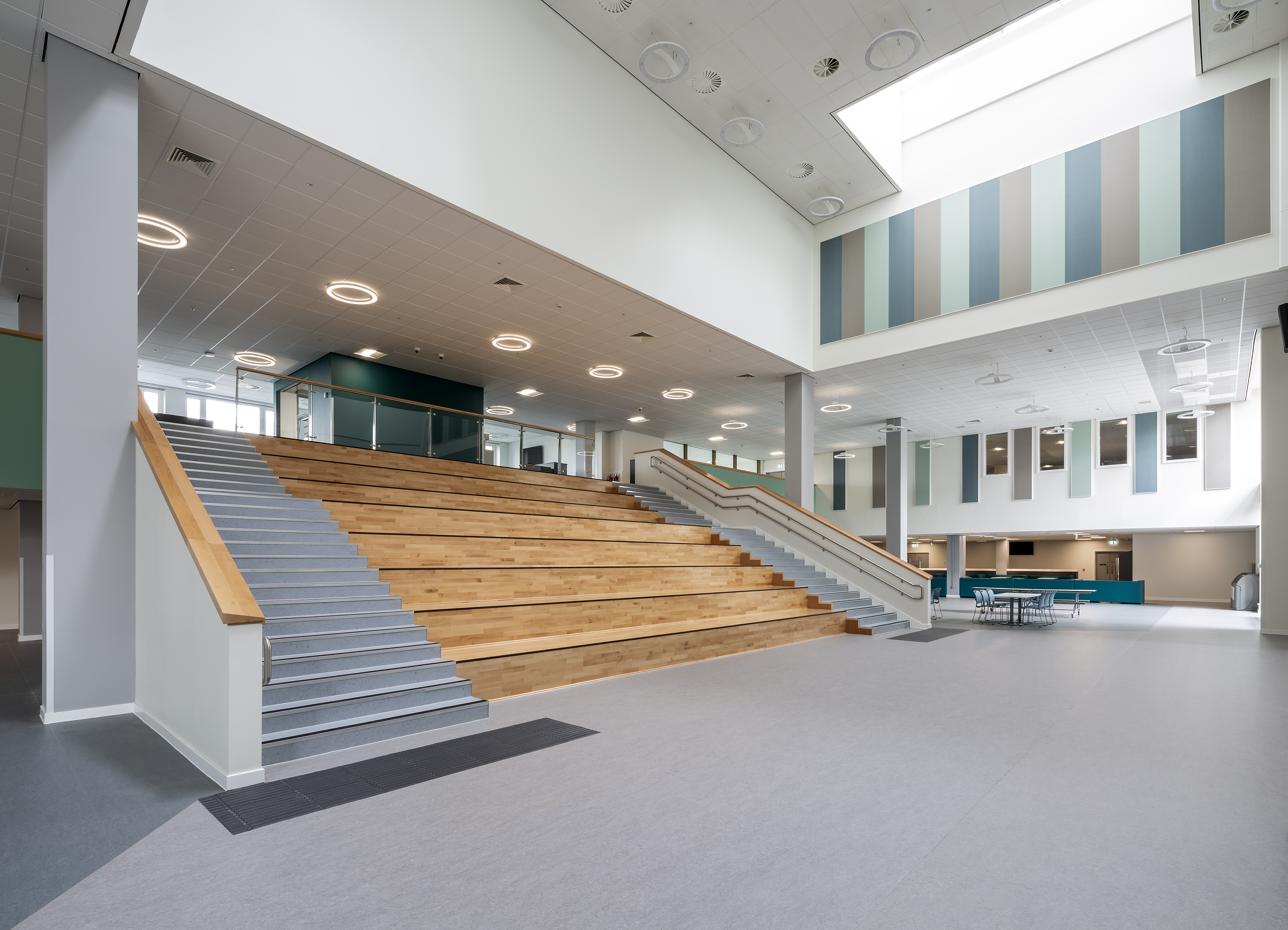
Social stairs in dining area.jpg

THE OUTCOME

The completed ventilation system plays a critical role in enabling Dunfermline Learning Campus to achieve Passivhaus certification at an unprecedented scale.

The project demonstrates how Passivhaus principles can be successfully applied to large, complex educational buildings, setting a benchmark for future developments across the UK.

As local authorities and developers increasingly look to meet net zero targets, Dunfermline Learning Campus provides a clear example of how advanced ventilation systems can support both sustainability goals and occupant wellbeing in modern public buildings.